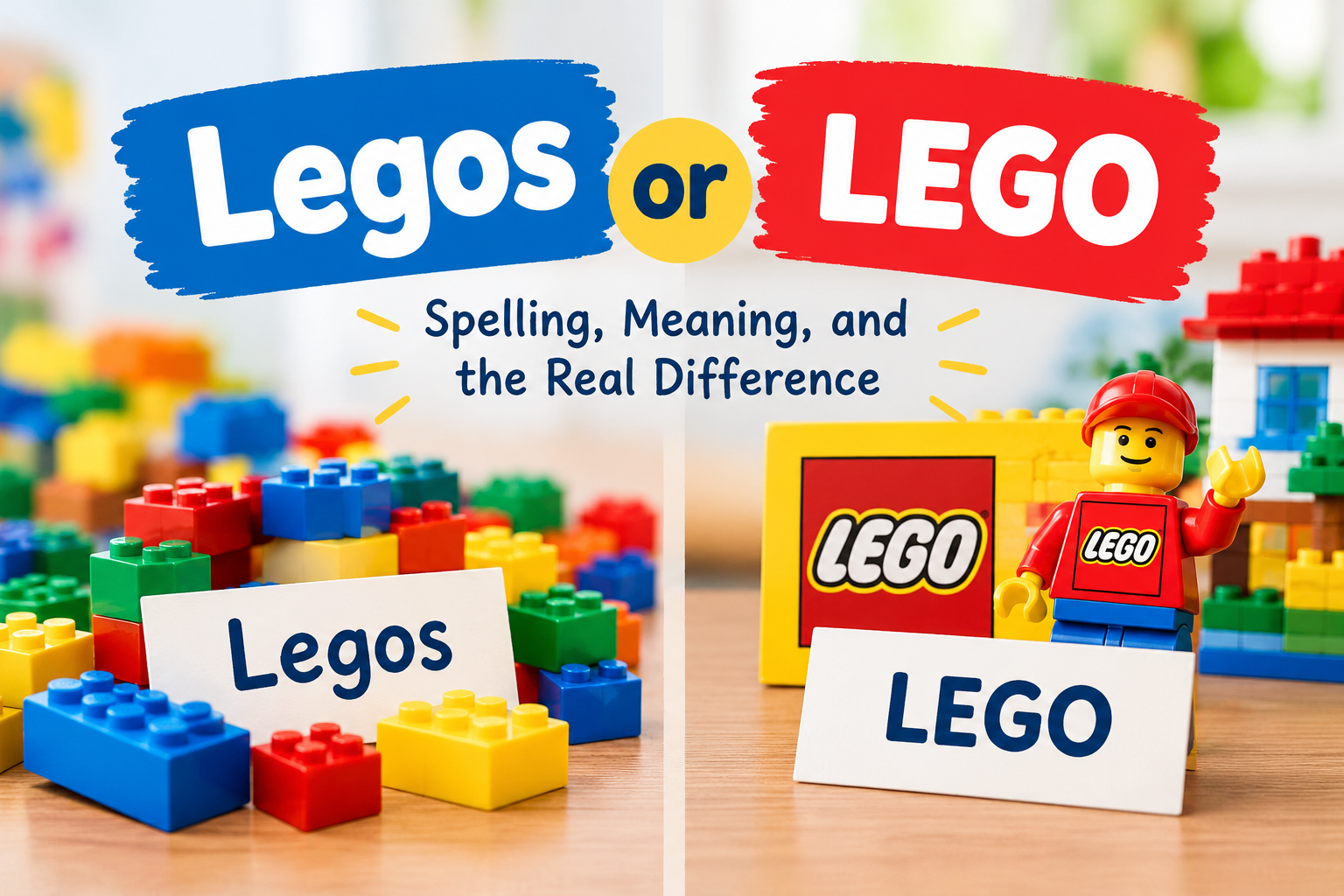
LEGO is the official brand name, while Legos is a common informal way people use the word for several LEGO pieces.
Imagine a child cleaning up a bedroom after building a small house. The child may say, “I need to put all my Legos away.” Many people say this in everyday English. But the LEGO Group uses the brand name LEGO and recommends phrases such as “LEGO bricks” or “LEGO elements.”
The keyword Legos or LEGO often causes confusion because people hear both forms. Some people use “Legos” as a plural noun. The company, however, treats LEGO as a trademark and asks people not to add a plural “s” to the trademark.
Understanding Legos or LEGO is useful for English learners, writers, teachers, parents, and content creators. It helps them understand the difference between everyday usage and official brand usage.
Pronunciation
LEGO — US: /ˈlɛɡoʊ/
LEGO — UK: /ˈlɛɡəʊ/
Legos — US: /ˈlɛɡoʊz/
Legos — UK: /ˈlɛɡəʊz/
The main stress is on the first syllable.
Read more about https://textlinkerpro.com/albany-or-hotels/
Transition
Now let’s look at how these forms differ and when each one may appear.
Difference Between Legos or LEGO
1. Brand Name
LEGO is the official brand name.
The LEGO Group uses LEGO as its trademark.
Examples:
- I bought a LEGO set.
- She loves LEGO toys.
2. Plural Use
Many people use Legos to mean several LEGO pieces.
Examples:
- The children picked up their Legos.
- There were Legos all over the floor.
However, the LEGO Group recommends “LEGO bricks” instead.
3. Official Writing
Official LEGO writing uses the trademark form LEGO.
Examples:
- LEGO bricks are easy to connect.
- He built a model with LEGO elements.
4. Informal Speech
“Legos” can appear in casual speech.
Examples:
- I played with Legos as a child.
- Please put your Legos in the box.
This reflects common everyday usage.
5. Grammar
“LEGO” works as a brand name.
Examples:
- I bought LEGO.
- She likes LEGO.
When talking about individual pieces, “LEGO bricks” is clearer.
6. Capitalization
The official brand name is written in capital letters: LEGO.
Examples:
- LEGO bricks
- LEGO sets
Writing “lego” does not follow the company’s preferred trademark style.
7. The Letter S
The LEGO Group specifically says not to add a plural s to the trademark.
Examples:
- Preferred: LEGO bricks
- Not preferred by the company: LEGOs
8. Formal Writing
Formal writing should use the official form.
Examples:
- The student built a model with LEGO bricks.
- The museum displayed a LEGO model.
9. Everyday Conversation
People may use “Legos” in casual conversation.
Examples:
- My son has lots of Legos.
- We found some Legos under the sofa.
10. Meaning
Both forms can point to the same toy brand in everyday communication.
The main difference is official trademark usage versus common informal usage.
Nature and Behaviour of Legos or LEGO
LEGO
LEGO is a brand name and trademark. The company recommends using it with a noun, such as “LEGO bricks,” “LEGO toys,” or “LEGO sets.”
Legos
“Legos” is a common informal plural form used by some English speakers to mean LEGO pieces.
It is easy to understand in casual conversation, but it does not follow the LEGO Group’s preferred trademark style.
Why People Get Confused About Legos or LEGO
The confusion comes from normal English grammar.
Many brand names become everyday nouns. People may naturally add -s when they mean several items.
For example:
- one toy → two toys
- one block → two blocks
- one LEGO brick → two LEGO bricks
Because people often say “Legos,” they may think it is the official plural form. The LEGO Group asks users to avoid that form and use “LEGO bricks” or “LEGO elements.”
Comparison Table
| Feature | LEGO | Legos |
|---|---|---|
| Official brand form | Yes | No |
| Capitalization | LEGO | Legos |
| Trademark use | Preferred | Not preferred |
| Common in casual speech | Yes | Yes |
| Means the brand | Yes | Often |
| Means several pieces | With a noun, such as LEGO bricks | Common informal use |
| Formal writing | Suitable | Avoid |
| Company preference | LEGO bricks | Not preferred |
| US usage | Common | Common informally |
| UK usage | Common | Also understood |
The Origin of the Keyword
The LEGO Group began in Denmark in 1932. It was founded by Ole Kirk Kristiansen. The name LEGO comes from the Danish words “leg godt,” meaning “play well.”
The company first focused on wooden toys. It later moved into plastic toys. In 1949, it introduced its first plastic bricks under the name “Automatic Binding Bricks.”
In 1953, the company began using the name LEGO Mursten, meaning “LEGO bricks.” The LEGO name was molded into the bricks that year.
The modern LEGO brick design was launched in 1958.
British vs American English
There is no major British-American spelling difference between LEGO and Legos.
The bigger difference is between official brand usage and everyday speech.
Examples:
- American casual speech: “I played with Legos.”
- British casual speech: “I played with LEGO.”
- Formal English: “I played with LEGO bricks.”
“LEGO” remains the official trademark form in both varieties of English.
Which One Should You Use?
US English
In casual US speech, you may hear “Legos” often. It is easy for listeners to understand.
For formal writing, use LEGO bricks.
UK English
British speakers also understand “Legos,” but LEGO bricks is a clear choice for formal writing.
Global English
For websites, articles, school work, and professional writing, LEGO bricks is the safest clear form because it follows the brand’s preferred usage.
Common Mistakes
Mistake 1: Writing “lego”
Incorrect brand style: lego
Better: LEGO
Mistake 2: Writing “LEGOs”
The LEGO Group asks people not to add a plural s to the trademark.
Better: LEGO bricks
Mistake 3: Writing “LEGO’s”
Do not use a possessive ‘s for the trademark in the company’s trademark guidance.
Better: the LEGO brand
Mistake 4: Writing “LEGO-bricks”
The company recommends using “LEGO bricks” without a hyphen.
Mistake 5: Using “Legos” in formal content
“Legos” may sound casual.
Better: LEGO bricks or LEGO elements.
Everyday Usage Examples
Emails
Formal:
The students used LEGO bricks during the class activity.
Casual:
Please bring your Legos tomorrow.
Social Media
Casual posts may say:
My kids built this with Legos.
A brand-focused post may say:
My kids built this with LEGO bricks.
News
News writing may use:
The exhibition featured a large LEGO model.
Formal Writing
A school paper could say:
LEGO bricks can be used in creative learning activities.
This is clearer than “Legos.”
Usage Trends
“Legos” is common in everyday English, especially when people talk about several pieces.
However, the LEGO Group continues to protect LEGO as a trademark. Its guidelines ask people to use LEGO as an adjective with a noun, such as “LEGO bricks.”
This creates two forms of usage:
- Everyday usage: Legos
- Official or careful usage: LEGO bricks
Both can be understood, but they serve different purposes.
Metaphors and Similes
LEGO is often used in comparisons because its pieces can connect to create larger structures.
Examples:
- “The project was built like LEGO bricks.”
- “Each idea fit together like LEGO pieces.”
These comparisons suggest that small parts can form something larger.
Connotative Meaning
Connotation means the feeling or idea connected with a word.
LEGO
LEGO often has positive associations.
It can suggest:
- Creativity
- Play
- Learning
- Building
- Childhood
Example:
LEGO play can bring back happy childhood memories.
Legos
“Legos” often sounds casual and friendly.
Example:
The kids spent the afternoon playing with their Legos.
In some contexts, it can sound less formal because it is an informal plural form.
Idioms and Proverbs
There are no major traditional English proverbs based on “LEGO.”
However, LEGO is sometimes used in modern comparisons.
Like LEGO
This means something can be easily put together from separate parts.
Example:
The system works like LEGO, with small parts fitting together.
This is a modern comparison rather than a traditional proverb.
Literature and Movies
LEGO has appeared in children’s books, building guides, educational books, and many forms of popular culture.
One major example is The LEGO Movie, a 2014 American animated comedy film. It uses LEGO characters and building ideas as the center of its story.
The film helped bring LEGO-related vocabulary into wider popular culture.
LEGO has also been used in children’s literature and educational materials because building activities can support creative play.
Why This Difference Matters
The difference matters because English has both everyday speech and formal language.
A person may hear “Legos” and understand it immediately. However, a writer working with official brand content may need to follow trademark rules.
The LEGO Group says its trademark should be written in capital letters and used with a noun. It also says not to add a plural “s” to the trademark.
For English learners, this is a useful example of how brand names can behave differently from normal nouns.
Usefulness in Daily Life
Knowing the difference helps when you:
- Write school assignments.
- Create blog posts.
- Write product descriptions.
- Talk about toys.
- Write social media posts.
- Create educational content.
- Edit professional articles.
- Use brand names correctly.
The simple rule is easy: use LEGO bricks when you want the official and clear form.
Situational Preference
The best form depends on the situation. In casual conversation, “Legos” is widely understood and may sound natural to many speakers. In formal writing, school work, professional content, and brand-related writing, “LEGO bricks” is clearer. The LEGO Group itself recommends using LEGO as a trademark with a noun and says not to use a plural “s” such as “LEGOs.” For global readers, “LEGO bricks” also makes the meaning clear without relying on informal grammar. If you are writing about the company or brand, keep LEGO capitalized.
Possible Question
Is “Legos” grammatically correct?
“Legos” is common informal English, but the LEGO Group does not recommend using the trademark as a plural noun.
Is LEGO the correct spelling?
Yes. LEGO is the official brand form and is written in capital letters.
Should I write “LEGO” or “Legos”?
For official and formal writing, use LEGO bricks or LEGO elements.
Why do people say “Legos”?
People often add “-s” to a brand name when they mean several items. This is common in everyday language.
Is LEGO used in British English?
Yes. LEGO is widely understood and used in British English.
Is LEGO a word?
LEGO is a brand name. It comes from the Danish words “leg godt,” meaning “play well.”
What is the plural of LEGO brick?
The clear plural is LEGO bricks.
Conclusion
Legos or LEGO is mainly about everyday usage and official trademark usage.LEGO is the official brand name. The LEGO Group recommends keeping the name in capital letters and using it with a noun, such as LEGO bricks, LEGO sets, or LEGO elements. It specifically advises against adding a plural “s” to the trademark, such as “LEGOs.”“Legos” is still common in casual English. Many people use it when they mean several LEGO pieces. Most listeners understand the meaning without difficulty.For English learners, the easiest rule is simple: use LEGO for the brand and LEGO bricks for the pieces. This form works well in formal writing, school work, websites, and professional content.The LEGO name has a long history. It began in Denmark in 1932 and comes from the Danish phrase “leg godt,” meaning “play well.

I’m Khadija Zafar, a content writer and blogger. I write simple, engaging articles on English grammar, word meanings, synonyms, antonyms, and vocabulary to help readers improve their English skills.







1 thought on “Legos or LEGO: Which Form Is Correct?”