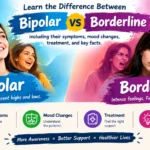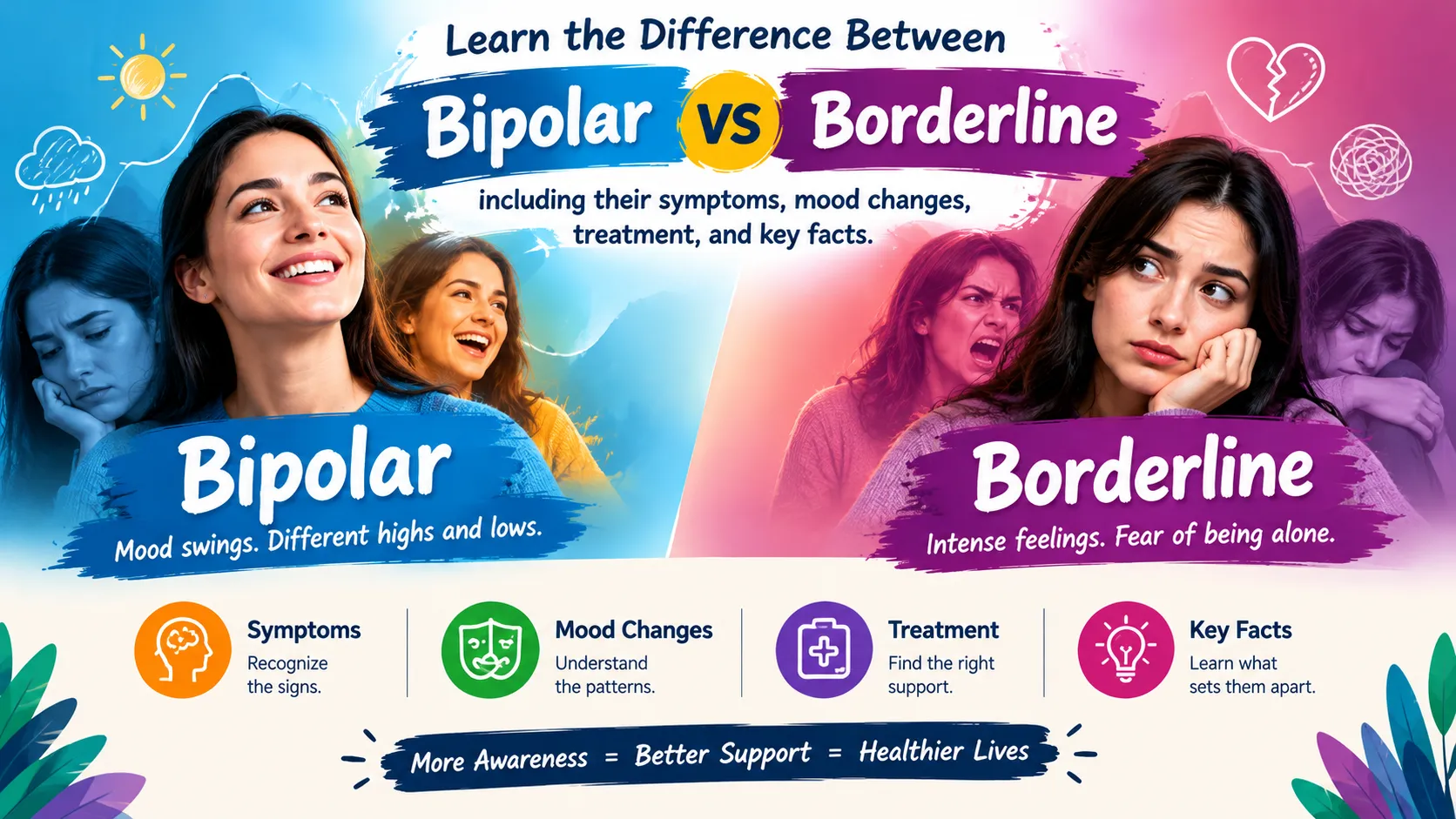
Although bipolar disorder and borderline personality disorder share some signs, they are two different mental health conditions. Both can affect a person’s mood and feelings, but each condition has its own symptoms and patterns.
Think of two people who feel upset. One person has very high energy for many days and needs little sleep. Later, that person may feel very sad. Another person feels fine but becomes very upset after a fight with a loved one. These changes may look the same, but they can have different causes.
Two mental health conditions can affect a person’s daily life and close relationships in different ways. Each condition has its own signs and symptoms. Understanding these differences can help people find the right care and support.
One condition can cause periods of very high or low moods. The other, called borderline personality disorder (BPD), can make strong feelings hard to manage. It may also affect how a person sees themself and others.
A trained health worker can help find the cause of these signs. The right care can help people feel better and live well.
Pronunciation
- Mood disorder
- US pronunciation: /muːd dɪsˈɔːrdər/
- UK pronunciation: /muːd dɪsˈɔːdə/
- Borderline
- US: /ˈbɔːrdərlaɪn/
- UK: /ˈbɔːdəlaɪn/
The words are spelled the same in US and UK English.v
Key Differences Between Two Mental Health Conditions
1. Type of Problem
This condition affects mood and energy. A person may have periods of very high or low moods.
BPD affects feelings, close ties, and how a person sees themself.
Examples:
- A person has very high energy for many days.
- A person feels upset when a close friend seems distant.
2. How Long Mood Changes Last
Mood episodes in bipolar disorder can last for days or weeks. In borderline personality disorder (BPD), mood changes may happen within a few hours.
Examples:
- A person feels full of energy for several days.
- A person feels sad soon after a hard talk.
These signs can differ from person to person.
3. Energy Levels
A person with bipolar disorder may feel full of energy and need very little sleep during a high mood.
A person with BPD may feel restless when upset. This does not always mean they have bipolar disorder.
Examples:
- A person sleeps very little but still feels active.
- A person feels restless after a fight.
4. Close Ties
People with borderline personality disorder may fear that others will leave them. The other condition can also affect family ties and friendships.
Examples:
- A person feels afraid when their partner does not reply.
- A person argues more during a time of high energy.
One sign alone cannot tell us what health problem a person has.
5. Sense of Self
A person with BPD may feel unsure about who they are. Their goals and views may change often.
A person’s feelings about themself may change during a mood episode.
Examples:
- A person often feels unsure about their goals.
- A person feels very strong and able during a high mood.
6. Sleep
During a high mood, a person with bipolar disorder may sleep very little and still feel full of energy.
A person with BPD may also have trouble sleeping due to stress or strong feelings.
Examples:
- A person sleeps only a few hours but feels active.
- A person cannot sleep after an argument.
7. Quick Actions
Both problems can lead to quick actions without much thought.
During a high mood, a person with bipolar disorder may spend too much money. A person with BPD may act quickly when strong feelings take over.
Examples:
- A person spends too much money during a high mood.
- A person sends angry texts after a fight.
Other things can also lead to such actions.
8. Mood Patterns
One mental health condition can cause episodes of high and low moods. During a low mood, a person may feel sad or lose interest in daily activities.
BPD can cause strong feelings that change fast. These changes may follow stress or trouble with close ties.
Examples:
- A person has days of high energy, then feels very low.
- A person feels very sad after a fight with a loved one.
9. Care and Help
Treatment for this condition may include medicine and talk therapy to help manage symptoms.
BPD is often treated with talk therapy. It can teach people how to handle strong feelings and build better ties.
Examples:
- A doctor helps a person find the right care.
- A therapist helps a person learn ways to stay calm.
Never start or stop medicine without advice from a doctor.
10. Can a Person Have Both?
Yes. A person can have both bipolar disorder and BPD.
A trained health worker will ask about signs and past events to learn more.
Examples:
- A person has high mood episodes and long-term trouble with close ties.
- A doctor checks a person’s health history before giving a diagnosis.
Nature and Symptoms of Bipolar Disorder and Borderline Personality Disorder
Bipolar Disorder
Changes in mood, sleep, and energy are common signs of bipolar disorder. A person may experience periods of very high or very low mood.
During a high mood, a person may talk fast, sleep less, or take risks. These changes can affect work, school, and home life.
A low mood may cause sadness, low energy, and less interest in daily tasks. Care can help people manage these signs.
Borderline Personality Disorder
BPD can make strong feelings hard to manage. It can also affect close ties and how a person sees themself.
A person may fear being left alone. They may feel empty or find it hard to control anger.
BPD is not a person’s fault. Talk therapy can teach skills to manage feelings and deal with stress.
Why People Confuse These Two Mental Health Conditions
People may mix up these problems because both can cause mood changes, sadness, anger, and quick actions.
The main difference is how each condition affects a person. One causes clear episodes of high or low moods. The other often affects emotions, close relationships, and self-image over time.
Some signs may overlap. A person may also have both problems. An online test cannot give a sure answer. A trained health worker can look at the full picture.
Comparison Table
| Feature | Bipolar Disorder | Borderline Personality Disorder |
|---|---|---|
| Main effect | Mood and energy | Feelings and close ties |
| Mood changes | Often last days or weeks | May change within hours |
| Sleep | Less sleep during a high mood | Stress may affect sleep |
| Self-image | May change during mood episodes | May feel unsure over time |
| Close ties | May be affected | Often a key concern |
| Care | Medicine and therapy | Often talk therapy |
| Can both occur? | Yes | Yes |
These are common signs, not rules for every person.
The Origin of the Terms
The term bipolar disorder refers to a mental health condition that causes episodes of high or low moods. These mood changes can also affect a person’s energy and daily life.
The word borderline has been used in mental health for many years. Today, BPD is the name of a known health problem.
Both terms have a set meaning in health care. They should not be used to hurt or shame people.
Also read more about https://textlinkerpro.com/annuity-or-cd/
British vs American English
The words are spelled the same in British and American English.
- UK English: bipolar disorder, borderline personality disorder
- US English: bipolar disorder, borderline personality disorder
Examples:
- The UK clinic helps people with bipolar disorder.
- The US clinic offers care for people with BPD.
Write the full name first before using BPD in an article.
Which One Should You Use?
Use bipolar disorder when talking about high and low mood episodes.
Use borderline personality disorder when talking about strong feelings, close ties, and self-image.
Common Mistakes
- Wrong: Both problems are the same.
Right: They are different health problems. - Wrong: Every mood change means bipolar disorder.
Right: Mood changes can have many causes. - Wrong: BPD only means mood swings.
Right: It can also affect close ties and self-image. - Wrong: A person with bipolar disorder is always unwell.
Right: A person can also have stable times. - Wrong: One action proves a health problem.
Right: A trained health worker must check the signs.
Everyday Usage Examples
In Emails
- “I am sharing a guide about bipolar disorder.”
- “We should use kind words when we talk about BPD.”
On Social Media
- These two mental health conditions are different from each other.
- “People with health problems need care and support.”
In News
- “The report explains the signs of bipolar disorder.”
- “The story talks about care for people with BPD.”
In Formal Writing
- “A doctor can check signs of bipolar disorder.”
- “BPD can affect feelings and close ties.”
Usage Trends
People search for both terms on health sites and in online posts. They may want to learn about their own feelings or help someone they know.
Some online posts make it seem easy to know if a person has a health problem. But a true answer may take time. Use trusted health sites and ask a trained health worker for help.
Metaphors and Similes
A metaphor helps us explain a feeling. But it cannot tell us if someone has a health problem.
- “A mood like a storm.” This means strong feelings.
- “Feelings rise like a wave.” This means a feeling grows stronger.
- “Thoughts move like a fast train.” This means thoughts seem to move very fast.
These are ways to talk about feelings. They are not a way to give a diagnosis.
Connotative Meaning
The terms bipolar disorder and BPD should be used with care.
- Neutral: “She gets care for bipolar disorder.”
- Neutral: “He is learning to manage BPD.”
- Hurtful: Using these words to mock a person.
- Kind: “She is getting help and support.”
A health problem does not tell us all about a person. Use kind and fair words.
Idioms and Proverbs
No common saying gives the exact meaning of either health problem. But some sayings can help us talk about hard times.
- “Take one day at a time.” Focus on one small step.
- “Every cloud has a silver lining.” There can be hope in hard times.
- “Actions speak louder than words.” What people do can matter, but one action cannot prove a health problem.
Literature and Movies
Books and films can help people learn about mental health. But they are stories, not health guides.
Books
- An Unquiet Mind (1995) by Kay Redfield Jamison shares the writer’s life with bipolar disorder.
- The Bell Jar (1963) by Sylvia Plath is a story about a young woman’s mental health.
Movies
- Silver Linings Playbook (2012, United States) tells the story of a man who has bipolar disorder.
- Girl, Interrupted (1999, United States) is about people in a mental health care centre.
Real people may have very different lives from those shown in books and films.
Why This Difference Matters
Knowing the difference can help people find the right care. The two problems can share some signs, but they are not the same.
Good facts can also help stop shame and unfair labels. Friends and family can listen and offer help. They should not try to give a diagnosis.
If mood changes affect sleep, work, school, or close ties, talk to a health worker.
Usefulness in Daily Life
This knowledge can help in many ways:
- For you: Tell a doctor what you feel.
- For family: Give help without blame.
- For students: Learn what each term means.
- For writers: Use kind and clear words.
- At work: Treat people with care.
Mood changes alone do not prove either problem. Stress, sleep, and other health issues can also affect mood.
Situational Preference
Use bipolar disorder when talking about high or low mood episodes. Use borderline personality disorder when talking about strong feelings, close ties, and self-image. In formal writing, give the full name first. In daily life, do not guess a person’s health problem. If you are worried about yourself or someone else, speak to a trained health worker. The goal is to understand people and help them, not to judge them.
Possible Question
1. What Is the Difference Between These Two Mental Health Conditions?z
One condition causes changes in mood and energy that may last for days or longer. The other can affect emotions, self-image, and close relationships. A mental health professional can help identify the condition and suggest the right care.
2. Can a person have both?
Yes. A trained health worker can check the signs.
3. Does bipolar disorder cause mood changes every hour?
Mood episodes linked to bipolar disorder may last for days or longer, but symptoms can vary from person to person.
4. Can BPD cause quick mood changes?
Yes. Strong feelings may change fast after stress or a problem with someone close.
5. Which one is more serious?
Both can cause pain and stress. Each person has different needs.
6. Can both problems be treated?
Yes. Care may include medicine, talk therapy, or both, based on a person’s needs.
7. How can I know which one I have?
An online test cannot give a sure answer. Talk to a trained health worker.
Conclusion
Bipolar vs Borderline compares two mental health conditions that affect mood and emotions in different ways. This article explains their symptoms, emotional patterns, and treatment options. Although both can affect daily life, they differ in how they influence a person’s mood and emotions..Although both can affect daily life, they differ in how they influence a person’s mood and emotions. One can cause periods of very high or low mood, while the other can affect emotions, self-image, and close relationships. Proper care and support can help people manage their symptoms. A trained health worker can help identify the right condition. Learning about these conditions helps us understand others and treat them with kindness and respect.

I’m Khadija Zafar, a content writer and blogger. I write simple, engaging articles on English grammar, word meanings, synonyms, antonyms, and vocabulary to help readers improve their English skills.