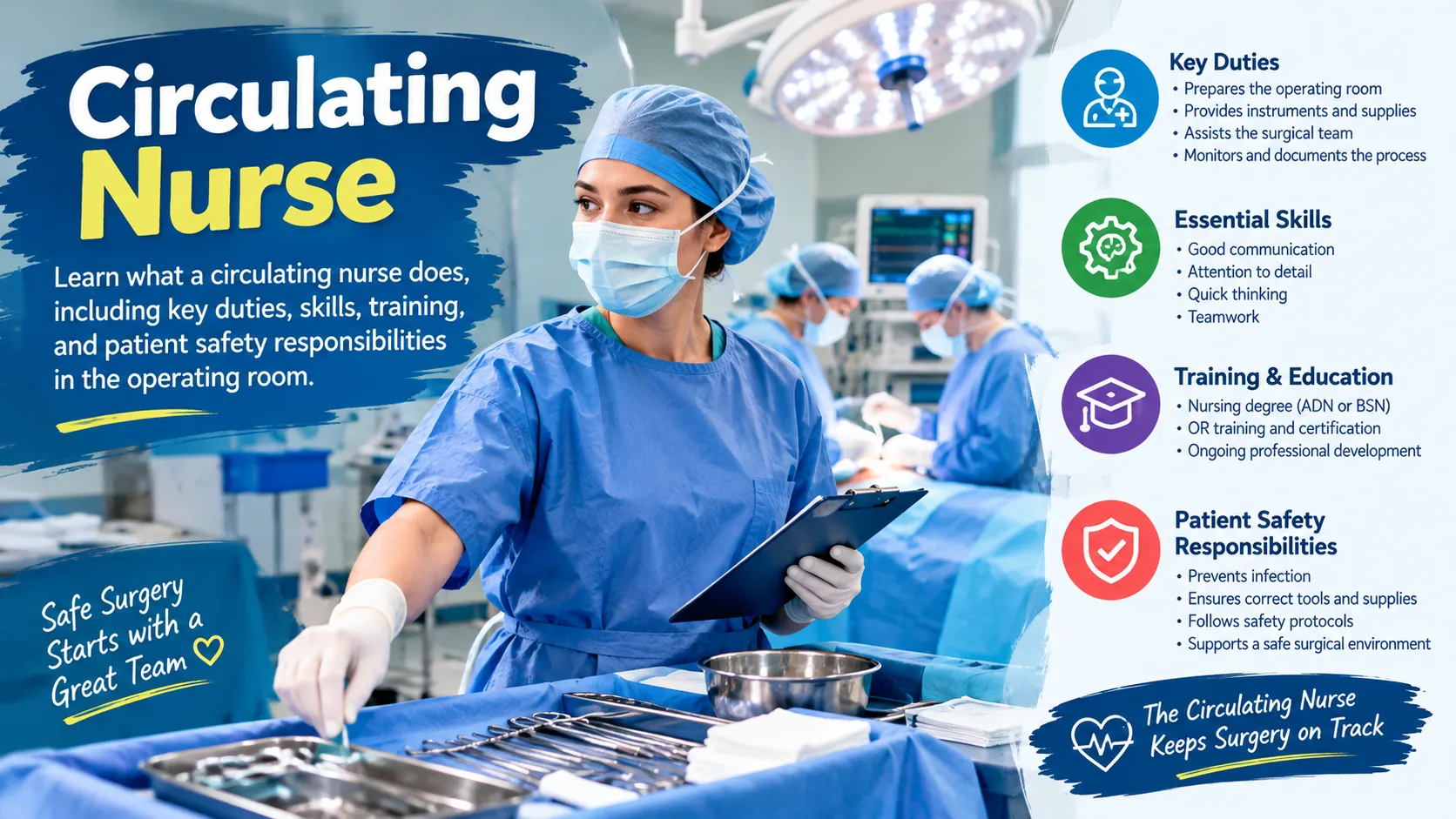
A circulating nurse helps keep patients safe during surgery. This nurse supports the surgical team, checks the operating room, and helps the procedure run smoothly.
Imagine a patient who is about to have surgery. The patient may feel scared and have many questions. A nurse checks the patient’s details, prepares the room, and makes sure the team has the right supplies. During the operation, the nurse watches for safety risks and helps when needed. These tasks are part of the job of a circulating nurse.
A circulating nurse is a trained nurse who works in an operating room. The nurse usually works outside the sterile field. This means the nurse can move around the room to provide supplies, record care, and help the team.
People often search for this term to learn about nursing duties, training, and career options. Some also confuse a circulating nurse with a scrub nurse. Both help during surgery, but their roles are different.
Learning about this job can help nursing students, patients, and new nurses understand how surgical teams work together.
Pronunciation of Circulating Nurse
- US English: /ˈsɝː.kjə.leɪ.tɪŋ nɝːs/
- UK English: /ˈsɜː.kjə.leɪ.tɪŋ nɜːs/
The word circulating has four syllables. The word nurse has one syllable.
What Does a Circulating Nurse Do?
A circulating nurse supports the patient and the surgical team before, during, and after surgery. The nurse helps keep the room safe and makes sure important tasks are completed.
The exact duties depend on the hospital, the type of surgery, and local rules. However, patient safety and teamwork are central parts of the role.
Ten Key Duties of a Circulating Nurse
1. Prepare the Operating Room
The nurse checks the room and makes sure the needed equipment is ready.
- Example 1: The nurse checks the lights and other equipment.
- Example 2: The nurse makes sure the required supplies are available.
2. Check Patient Details
The nurse helps confirm the patient’s identity and planned procedure.
- Example 1: The nurse checks the patient’s name and date of birth.
- Example 2: The nurse confirms the planned surgery with the team.
3. Support Patient Safety
The nurse takes part in safety checks and speaks up about possible problems.
- Example 1: The nurse joins the team check before surgery.
- Example 2: The nurse reports a mismatch in the patient’s records.
4. Help Position the Patient
The nurse works with the team to place the patient safely.
- Example 1: The nurse helps position a patient for knee surgery.
- Example 2: The nurse checks that the patient’s arm is supported.
5. Protect the Sterile Field
The nurse watches for problems that could affect the clean area used during surgery.
- Example 1: The nurse notices that a sterile item may have been touched.
- Example 2: The nurse tells the team about a possible break in sterile practice.
6. Provide Supplies
The nurse brings extra supplies when the team needs them.
- Example 1: The nurse gets another sterile pack.
- Example 2: The nurse finds a tool requested by the surgeon.
7. Record Important Information
The nurse documents required details about the procedure and patient care.
- Example 1: The nurse records key details during surgery.
- Example 2: The nurse documents care according to hospital rules.
8. Help with Surgical Counts
The nurse works with the scrub team to count items such as sponges, needles, and instruments.
- Example 1: The nurse joins the count before surgery begins.
- Example 2: The nurse follows the required count process before the wound is closed.
9. Communicate with the Team
The nurse shares important information with other healthcare workers.
- Example 1: The nurse tells the team when more supplies are needed.
- Example 2: The nurse reports a change that may affect patient safety.
10. Speak Up for the Patient
The nurse helps protect the patient, especially when the patient cannot speak during surgery.
- Example 1: The nurse raises a concern about the patient’s position.
- Example 2: The nurse alerts the team to a possible safety risk.
Nature and Behaviour of a Circulating Nurse
A good circulating nurse is calm, careful, and organized. The nurse must pay attention to small details while watching what happens across the room.
Important skills include:
- Focus: Notice small details.
- Teamwork: Work well with other staff.
- Clear communication: Share information in simple words.
- Quick thinking: Respond to problems in time.
- Patience: Treat patients and staff with respect.
- Honesty: Report mistakes and safety concerns.
For example, the nurse may need to find extra supplies while listening to an update from another team member. Good planning helps manage both tasks.
Why People Get Confused About This Role
People may think that all operating room nurses do the same work. However, a circulating nurse and a scrub nurse have different duties.
A circulating nurse usually works outside the sterile field. The nurse coordinates care, gets supplies, and records important information.
A scrub nurse works within the sterile field. This nurse handles sterile instruments and passes them to the surgeon.
Both roles are important. They work together to support safe surgery.
Comparison Table
| Feature | Circulating Nurse | Scrub Nurse |
|---|---|---|
| Main role | Coordinates care | Handles sterile instruments |
| Work area | Usually outside the sterile field | Inside the sterile field |
| Supplies | Gets extra items | Organizes sterile items |
| Records | Documents required care | Helps with counts and team tasks |
| Main goal | Support safety and teamwork | Support the procedure |
The Origin of the Term
The word nurse has a long history in English and is linked to caring for another person.
The word circulating comes from circulate, which means to move around. In an operating room, the term describes a nurse who moves around the room to support the team and manage supplies.
Together, the words describe a nurse who coordinates care across the operating room.
British vs American English
The term circulating nurse is common in US healthcare. In the UK, people may use terms such as theatre nurse or scrub nurse, depending on the job.
Examples:
- US English: The circulating nurse checked the operating room.
- UK English: The theatre team prepared the room for surgery.
These terms are not always exact matches. Their meaning depends on the duties and workplace.
Which Term Should You Use?
- US readers: Use circulating nurse for this specific operating room role.
- UK readers: Explain the exact role and use the local job title.
- Global readers: Use circulating nurse and define it when it first appears.
If you are writing for nursing students, explain how the role differs from that of a scrub nurse. This helps readers understand the terms.
Common Mistakes
- Mistake: A circulating nurse and a scrub nurse are the same.
Correction: Their duties are different. - Mistake: A circulating nurse only brings supplies.
Correction: The nurse also supports safety, records care, and coordinates tasks. - Mistake: Every hospital uses the same job title.
Correction: Titles and duties can vary by country. - Mistake: The nurse works alone.
Correction: The nurse is part of a surgical team.
Everyday Usage Examples
In an email:
“Please confirm the circulating nurse assigned to tomorrow’s operation.”
On social media:
“A circulating nurse helps keep the operating room safe.”
In a news report:
“The hospital added more operating room staff to support patient care.”
In formal writing:
“The circulating nurse helps coordinate care during surgery.”
Usage Trends
The term circulating nurse is common in US healthcare and nursing education. It appears in job listings, training materials, and hospital documents.
Other countries may use different titles for similar work. The role remains important because surgical teams need clear communication and safe care.
Metaphors and Similes
Metaphors and similes can help explain the role in simple ways.
- A safety net: The nurse helps identify problems before they harm the patient.
- The eyes of the room: The nurse watches for risks.
- Like a team coordinator: The nurse helps people and supplies come together.
- A steady hand: The nurse stays calm during busy moments.
Connotative Meaning
The phrase circulating nurse has a neutral meaning because it names a healthcare job.
It can also suggest positive ideas, such as care, trust, safety, and teamwork. These ideas come from the nurse’s duties.
The phrase is not usually negative. Its meaning may depend on the situation in which it appears.
Idioms and Proverbs
No common idiom refers only to circulating nurses. However, some sayings fit the work.
- “Better safe than sorry.” The nurse checks details to reduce risks.
- “Teamwork makes the dream work.” The surgical team must work together.
- “Keep an eye on things.” The nurse stays alert to changes.
Literature and Movies
Medical books and films often show nurses working with surgeons and other staff. Medical dramas may show teamwork, urgent care, and pressure in the operating room.
However, a film may not show every duty of a circulating nurse. Real work also includes patient checks, records, safety steps, and communication.
Nursing textbooks and professional guidance are better sources for learning the full role.
Why This Role Matters
A circulating nurse helps protect patients who may not be able to speak during surgery. The nurse checks details, watches for risks, and tells the team about concerns.
The role also helps the surgical team stay organized. Clear communication and accurate records can reduce confusion.
For nursing students, learning about this job can help with career planning. Patients can also better understand the people who support their care during surgery.
Usefulness in Daily Life
Understanding this role is useful for:
- Nursing students: Learn about a career path.
- New nurses: Understand the need for training and teamwork.
- Patients: Learn who may help protect them during surgery.
- Healthcare writers: Use the correct job title.
- Families: Understand the work of the surgical team.
Situational Preference
Use circulating nurse when discussing a nurse who coordinates care in an operating room, especially in US healthcare. Use scrub nurse when talking about the person who handles sterile instruments. For UK readers, theatre nurse may be more familiar, but it can describe a wider range of work. For global readers, define each term and explain the key differences. This makes the article clear for people in different countries and helps avoid confusion about nursing duties.
Possible Question
1. What is a circulating nurse?
A circulating nurse coordinates care and helps maintain safety in the operating room during surgery.
2. What are the main duties of a circulating nurse?
The duties include preparing the room, checking patient details, providing supplies, recording care, and watching for safety risks.
3. Is a circulating nurse the same as a scrub nurse?
No. A circulating nurse usually works outside the sterile field. A scrub nurse works within it and handles sterile instruments.
4. What skills does a circulating nurse need?
The nurse needs focus, teamwork, clear communication, patience, and good organization.
5. Where does a circulating nurse work?
The nurse may work in hospital operating rooms and surgery centers.
6. What education is needed for this job?
Requirements vary by country. In the US, this role is generally performed by a registered nurse. Nursing education, a license, and training in surgical care are important.
7. Why is a circulating nurse important?
The nurse helps protect the patient, supports the surgical team, and helps keep the procedure organized and safe.
Conclusion
Circulating nurse is an important member of the surgical team. The nurse prepares the operating room, checks patient details, provides supplies, records care, and watches for safety risks. The main goal is to protect the patient and help the team work well together.This role differs from that of a scrub nurse. A circulating nurse usually works outside the sterile field and coordinates care across the room. A scrub nurse works within the sterile field and handles sterile instruments. Both roles help support safe surgery.People who want to become a circulating nurse need the right education, training, and skills. Focus, teamwork, and clear communication are important parts of the job. Exact requirements depend on the country and workplace.Learning about this role can help nursing students plan their careers. It can also help patients understand who supports their care during surgery. When writing about this topic, explain the job clearly and show how it differs from other operating room roles.

I’m Khadija Zafar, a content writer and blogger. I write simple, engaging articles on English grammar, word meanings, synonyms, antonyms, and vocabulary to help readers improve their English skills.











1 thought on “Circulating Nurse: Duties, Skills, and Role in Surgery”