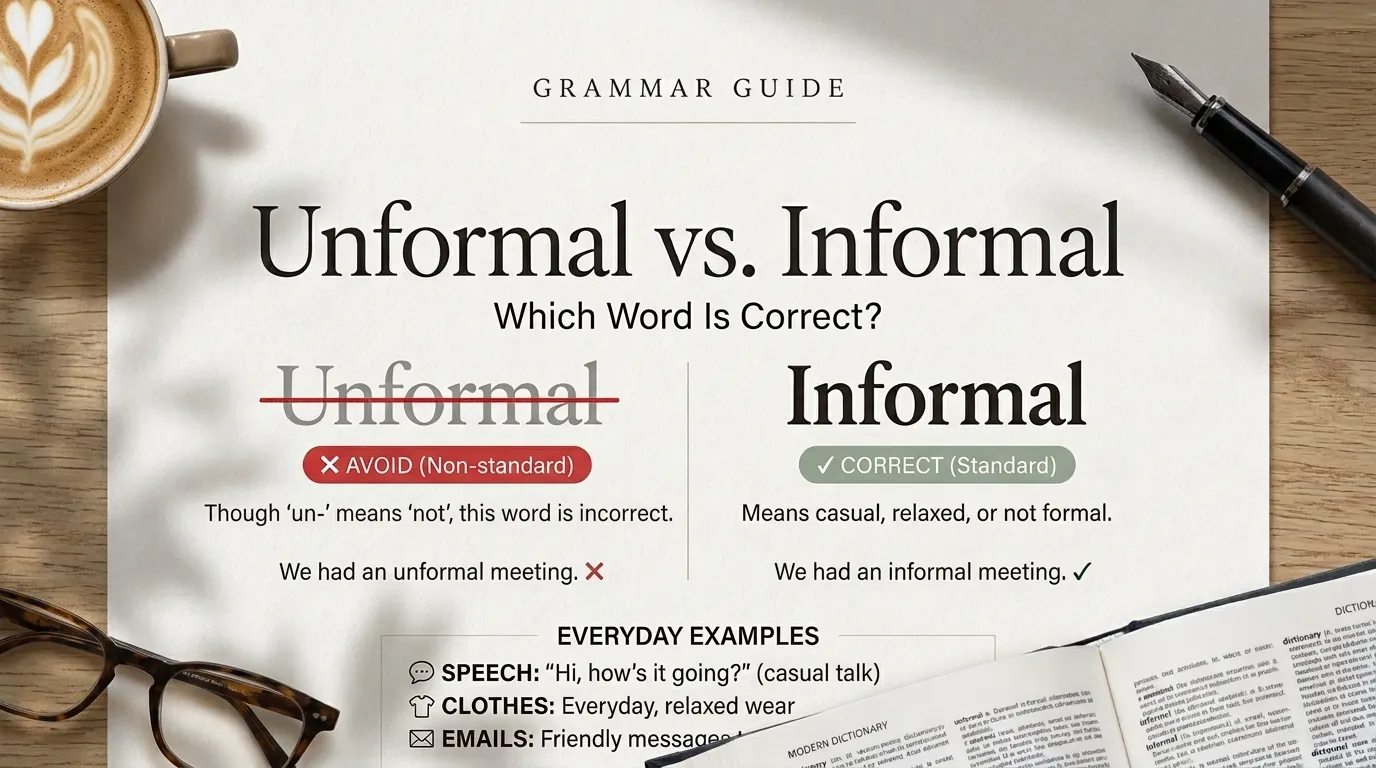
The correct word is informal. It means relaxed, casual, or not formal. “Unformal” is not a common standard English word, so you should use “informal” in most cases.
Imagine you are writing an email to your best friend. You may start with “Hi!” and use simple words. You do not need to write like you are talking to your boss. This is an informal style. Now, imagine you are writing a letter to a school head or a company manager. You may need a more formal style.
Many English learners search for unformal or informal because both words seem possible. The prefix “un-” often means “not,” so people may think “unformal” is correct. However, English does not use every prefix with every word. “Informal” is the accepted word for a casual style.
Learning the difference helps you write better emails, messages, school work, and reports. It also helps you choose the right tone for each person and place. In this guide, you will learn the meaning, use, history, and common mistakes linked to these words.
Pronunciation of Unformal and Informal
- Unformal
- US: /ʌnˈfɔːrməl/
- UK: /ʌnˈfɔːməl/
- Note: This word is uncommon in standard English.
- Informal
- US: /ɪnˈfɔːrməl/
- UK: /ɪnˈfɔːməl/
The main stress is on the second part of “informal.” Say it clearly and slowly when you are learning it.
Difference Between Unformal or Informal
1. Correct Word
“Informal” is the standard word. “Unformal” is not commonly used in standard English.
Examples:
- Correct: We had an informal meeting.
- Incorrect: We had an unformal meeting.
2. Meaning
“Informal” means casual or relaxed. It often describes speech, clothes, events, and writing.
Examples:
- We wore informal clothes to the party.
- The teacher had an informal chat with us.
3. Grammar
“Informal” is an adjective. It describes a noun, such as a talk, letter, or event.
Examples:
- This is an informal email.
- They held an informal meeting.
“Unformal” is not the usual choice for these sentences.
4. Use in Writing
Use “informal” when you write in a relaxed style. This may include messages to friends or family.
Examples:
- I sent an informal note to my cousin.
- She wrote an informal post online.
5. Use at Work
Informal language can be useful at work when people know each other well. But formal language may be better for clients or official letters.
Examples:
- We had an informal talk during lunch.
- The manager sent an informal message to the team.
6. Use in School
Students may use informal language when talking with friends. They may need formal language for essays and school reports.
Examples:
- The students had an informal chat after class.
- The essay needs a formal style, not an informal one.
7. Tone
“Informal” often gives a friendly and relaxed tone. It can make a message sound warm and natural.
Examples:
- “Hey, how are you?” sounds informal.
- “Dear Sir or Madam” sounds more formal.
8. Clothes
“Informal” can describe clothes that are not meant for official or special events.
Examples:
- I wore informal clothes at home.
- The event allows informal dress.
9. Speech
Informal speech often uses everyday words. It may include short forms like “I’m” and “we’re.”
Examples:
- “I’m going home now” is informal.
- “I am leaving for home now” sounds more formal.
10. Best Choice
In almost all everyday writing, choose “informal” instead of “unformal.”
Examples:
- Correct: The event has an informal dress code.
- Better: Please use an informal tone in your message.
Nature and Behaviour of the Words
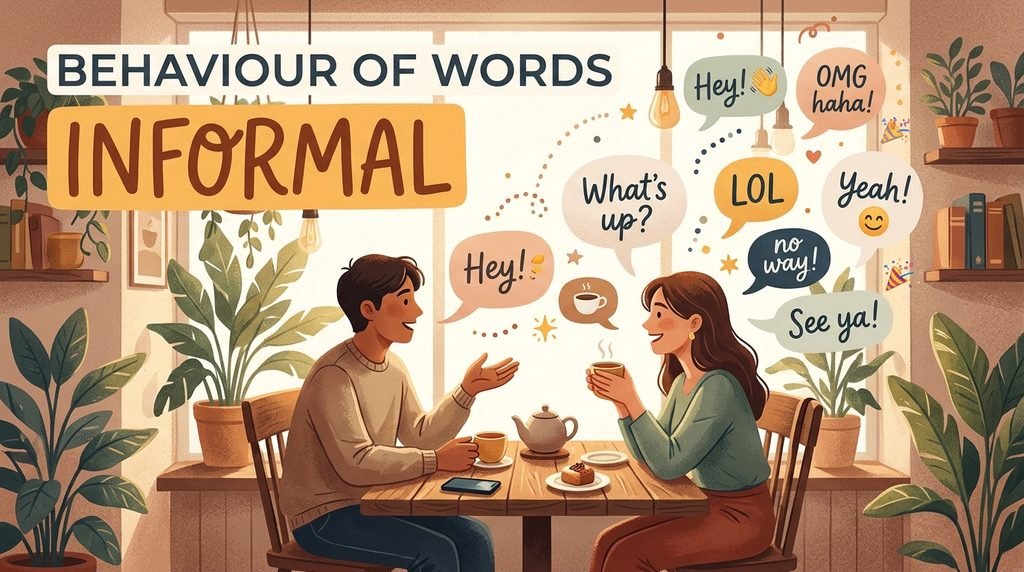
Informal
“Informal” is a common English word. It is used in daily life, at work, and in school. It can describe a chat, meeting, dress code, or style of writing.
An informal message may sound friendly and easy to read. It is often used with people you know well.
Examples:
- We had an informal talk over tea.
- My friend sent me an informal text.
Informal does not always mean rude or careless. It simply means less formal.
Unformal
“Unformal” is rare in standard English. People may use it because they think “un-” means “not.” However, it is not the normal word for a casual style.
Examples:
- Avoid “unformal email” in standard writing.
- Use “informal email” instead.
Why People Get Confused About Unformal or Informal
People often think “unformal” should mean “not formal.” This seems logical because English uses “un-” in words such as “unhappy” and “unsafe.”
But English word building has rules and exceptions. A word may look correct but still be unusual or nonstandard. In this case, “informal” is the word people normally use.
Examples:
- We say “informal clothes,” not usually “unformal clothes.”
- We say “informal speech,” not usually “unformal speech.”
The easiest rule is simple: use “informal” when you mean casual or relaxed.
Comparison Table
| Feature | Unformal | Informal |
| Standard English | Uncommon | Correct and common |
| Meaning | Not a usual standard choice | Casual or relaxed |
| Grammar | Rare adjective form | Adjective |
| Emails | Avoid it | Informal email |
| Meetings | Avoid it | Informal meeting |
| Daily speech | Rare | Common |
| Best choice | Usually no | Yes |
The Origin of Informal
The word “informal” comes from “formal,” with the prefix “in-.” The word “formal” is linked to form, shape, or a set way of doing something.
Over time, “formal” came to describe things that follow set rules or customs. “Informal” came to describe things that do not follow those strict rules.
The prefix “in-” can mean “not” in words such as “incomplete.” However, prefixes do not work with every word in the same way. This is one reason “unformal” is not the normal choice.
Examples:
- A formal dinner may have set rules.
- An informal dinner may be relaxed and simple.
Also read more about https://textlinkerpro.com/buffaloes-or-buffalos/
British vs American English
British and American English both use “informal.” There is no major spelling difference between the two forms.
Examples:
- US English: We had an informal meeting.
- UK English: We had an informal meeting.
Both forms are correct. The word can be used in school, work, and daily life in both countries.
Which One Should You Use?
Use “informal” in the US, the UK, and other English-speaking places. It is the standard word for a casual style.
If you are writing to a friend, an informal message may be fine. If you are writing to a boss, teacher, or customer, think about the situation first. A formal style may be safer for an official message.
For school work, job applications, and business reports, choose words that are clear and correct. If you are not sure, use “informal” rather than “unformal.”
Common Mistakes
Here are some common mistakes and their corrections.
- Incorrect: I sent an unformal email.
Correct: I sent an informal email. - Incorrect: We had an unformal meeting.
Correct: We had an informal meeting. - Incorrect: His speech was unformal.
Correct: His speech was informal. - Incorrect: Wear unformal clothes.
Correct: Wear informal clothes. - Incorrect: This letter sounds unformal.
Correct: This letter sounds informal.
Remember that informal language is not always suitable for every setting. Choose the tone that fits your reader.
Everyday Usage Examples
Emails
Informal: Hi Sam, can we talk after lunch?
Formal: Dear Mr. Lee, may we arrange a meeting after lunch?
Social Media
Informal: Had a great day with my friends!
Formal: I had a pleasant day with my friends.
News
News reports often use a clear and neutral style. An informal quote may appear when a person speaks in a relaxed way.
Example: The coach had an informal talk with the players.
Formal Writing
Formal: Please contact me if you need more details.
Informal: Let me know if you need more details.
Both can be correct, but the best choice depends on the reader and purpose.
Usage Trends
“Informal” is widely used in modern English. It appears in books, websites, school lessons, job guides, and daily messages.
People use it when they talk about casual speech, relaxed clothes, friendly meetings, or simple writing. The word is common in both British and American English.
“Unformal” is much less common. It may appear in learner writing or as a mistake. For clear and natural English, use “informal.”
Metaphors and Similes

“Informal” can help describe a relaxed feeling. It is not usually a metaphor by itself, but it can be used in creative writing.
Examples:
- The meeting felt as easy as a chat with a friend.
- Her informal style made the room feel warm.
- The talk was as relaxed as a quiet walk in the park.
These examples show that informal settings can feel friendly and easy.
Connotative Meaning
“Informal” is usually neutral or positive. It can suggest warmth, comfort, and ease. In some cases, it may suggest that something is not strict enough.
Positive:
- We had a warm, informal talk.
- The informal event helped everyone feel welcome.
Neutral:
- The team held an informal meeting.
- He sent an informal note.
Negative in some settings:
- The report was too informal for a court.
- Her informal reply did not suit the formal event.
The word itself is not bad. The setting decides whether an informal style is suitable.
Idioms and Proverbs
There are no common idioms that depend on the word “informal.” However, some phrases describe the same relaxed idea.
“Break the ice” means to help people feel less shy.
Example: The teacher used a game to break the ice at the informal meeting.
“Feel at home” means to feel relaxed and welcome.
Example: The host made us feel at home during the informal dinner.
These phrases can help you talk about friendly and relaxed settings.
Literature and Movies
Informal speech is common in books and films because people do not speak in the same way in every situation.
In The Adventures of Tom Sawyer by Mark Twain, first published in 1876, characters often speak in everyday ways. This helps readers understand their lives and friendships.
In the US film Toy Story (1995), many talks between the characters sound casual and friendly. This kind of speech helps show their feelings and bonds.
Formal language can also appear in books and films when characters speak to leaders, teachers, or people they do not know well.
Why This Difference Matters
Knowing the right word helps you write clear English. If you use “unformal” in a school essay or work email, the reader may think it is a spelling or word choice error.
Using “informal” helps your writing sound natural. It also helps you choose the right tone for each person.
For English learners, small word choices can make a big difference. Learning common words and their correct use can build confidence.
Examples:
- Use informal language with a close friend.
- Use formal language in an official letter.
Usefulness in Daily Life
You can use “informal” in many daily situations. It may describe a chat, a meal, a meeting, or a message.
At home, you may speak informally with family. At work, you may have informal talks with your team. In school, you may use informal words when talking with friends.
The main point is to think about who will read or hear your words. A casual style can be friendly, but an official task may need a formal style.
Situational Preference

Choose “informal” when you mean casual or relaxed. It works in daily speech, friendly emails, chats, and relaxed events. In the US and UK, it is the standard word.
Do not use “unformal” in school essays, business reports, or official letters. It is uncommon in standard English and may look like a mistake.
If you need to sound polite and professional, use formal language. If you are talking with a friend, informal language may feel more natural. Always think about the reader, the place, and the reason for your message.
Possible Question
1. Is “unformal” a correct word?
It is rare and not commonly accepted in standard English. Use “informal” for a casual or relaxed style.
2. What does “informal” mean?
It means casual, relaxed, or not formal. It can describe speech, writing, clothes, and events.
3. Is “informal” the opposite of “formal”?
Yes. “Informal” often means less strict or less official than “formal.”
4. Can I use “informal” in an email?
Yes. It is useful for emails to friends or people you know well. For official emails, a formal style may be better.
5. Is “informal” the same in British and American English?
Yes. Both use the same spelling and meaning.
6. Why do people write “unformal”?
They may think the prefix “un-” means “not,” so the word looks logical. But “informal” is the normal word in English.
7. What is an example of an informal sentence?
“Hi, how are you?” is an informal greeting. It is common with friends and family.
Conclusion
Unformal or informal may look like they have the same meaning, but they are not used in the same way. Informal is the standard English word. It means casual, relaxed, or not formal. You can use it to describe a chat, email, meeting, event, or style of speech. “Unformal” is rare in standard English. It may seem correct because “un-” often means “not,” but English does not use this prefix with every word. For this reason, it is best to avoid “unformal” in school work, business writing, and daily messages. Remember this easy rule: use “informal” when you mean relaxed or casual. Use formal language when a situation needs a polite or official tone. Think about your reader before you choose your words. With practice, you will learn to use the right style in emails, reports, and talks. Small changes like this can make your English clearer and more natural.

I’m Khadija Zafar, a content writer and blogger. I write simple, engaging articles on English grammar, word meanings, synonyms, antonyms, and vocabulary to help readers improve their English skills.









1 thought on “Unformal or Informal: Which Word Is Correct?”